

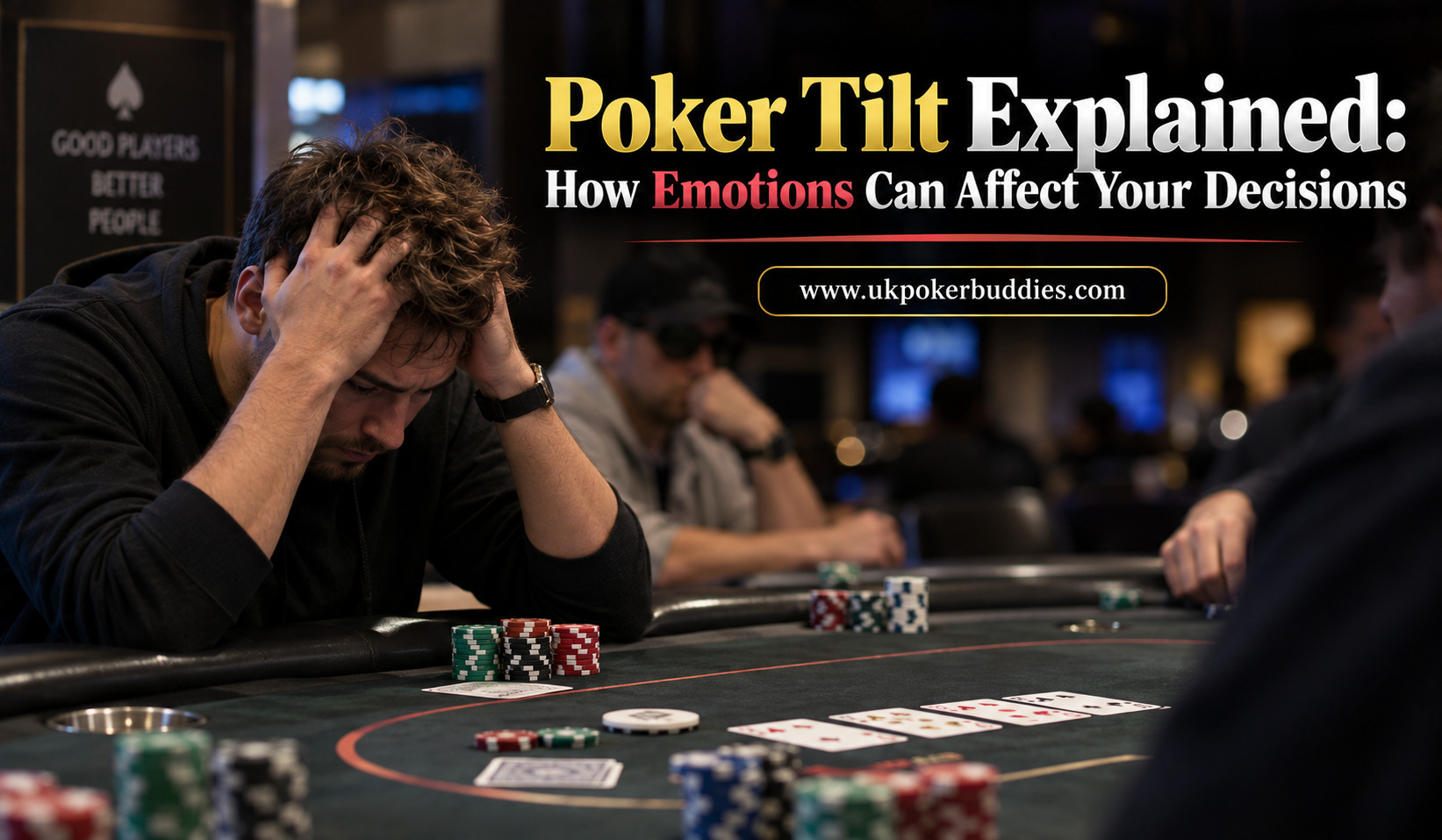
Poker is a game that involves mathematics, probability, strategy, and decision-making. But there is another factor that can have a major impact on how someone plays: emotions.
A player may understand poker strategy perfectly but still make poor decisions after losing several hands, suffering a bad beat, or becoming frustrated with an opponent. This emotional state is commonly known as poker tilt.
Tilt can cause players to abandon their normal strategy and make decisions based on anger, frustration, excitement, fear, or disappointment. Understanding what causes tilt and recognizing its warning signs can help players protect their decision-making and maintain better discipline at the table.
What Is Poker Tilt?
Poker tilt is a state where emotions negatively influence a player’s judgment and decision-making.
A player on tilt may start taking unnecessary risks, playing too many hands, making larger bets, or chasing losses.
Tilt does not always look like anger. A player can also experience tilt after an unusually successful run. Overconfidence can lead to careless decisions just as frustration can.
The common factor is that emotional reactions begin replacing rational decision-making.
What Causes Poker Tilt?
Tilt can have many different triggers.
A bad beat is one of the most common. You may have a very strong hand and be heavily favored to win, only for an unlikely card to give your opponent the pot.
Losing several hands in a row can also create frustration.
Other triggers include:
- Losing a large pot
- Being repeatedly bluffed
- Making a mistake and regretting it
- Facing an aggressive opponent
- Experiencing a long losing session
- Winning too quickly and becoming overconfident
Different players have different emotional triggers, so understanding your own patterns is important.
Why Tilt Can Hurt Your Poker Strategy
Good poker decisions are based on available information.
You consider your cards, your opponent’s range, position, pot odds, board texture, and betting action.
Tilt can interrupt this process.
Instead of asking whether a decision is profitable, a frustrated player may think:
“I need to win this pot back.”
That mindset can lead to poor calls and unnecessary aggression.
Poker results are uncertain in the short term. Trying to immediately recover losses can therefore create even larger losses.
Chasing Losses
One of the clearest signs of tilt is chasing losses.
Imagine losing a large pot and immediately deciding that you need to win it back.
You may start playing hands you would normally fold. You may call larger bets or attempt risky bluffs simply because you want to recover the money.
The problem is that previous losses do not make the next hand more likely to produce a win.
Each hand presents a new situation.
Making decisions based on the need to recover losses can therefore move you further away from your normal strategy.
Anger Tilt
Anger is one of the most recognizable forms of poker tilt.
A player may become frustrated with an opponent, the cards, or their own mistakes.
This can result in excessive aggression.
For example, after an opponent wins a large pot, an angry player may start raising and re-raising simply to challenge them.
The problem is that aggression without a strategic reason can become predictable and expensive.
Strong poker aggression should come from the situation, not from emotional retaliation.
Frustration Tilt
Frustration can develop more gradually.
You may not feel extremely angry, but after repeatedly missing draws or receiving poor starting hands, you may become impatient.
This can lead to playing hands outside your normal range.
A player might think:
“I have been folding for too long. I need to play this hand.”
That is an emotional decision rather than a strategic one.
Patience is especially important during periods when you are receiving poor cards.
Winning Tilt
Tilt is not always caused by losing.
Winning several large pots can produce overconfidence tilt.
A player may start believing they are reading opponents perfectly or that they are destined to continue winning.
As confidence increases, they may play weaker hands, make larger bluffs, or ignore warning signs from opponents.
A profitable session can therefore still contain poor decisions.
The goal is to remain disciplined regardless of whether you are winning or losing.
Fear and Caution
Emotions can also make players too cautious.
After losing a large pot, a player may become afraid of losing again.
They might fold hands that should be played or avoid profitable bets.
This can be just as damaging as reckless aggression.
Good poker requires accepting that losses are part of the game and evaluating each decision independently.
Recognizing Your Tilt Signals
The first step toward controlling tilt is recognizing your personal warning signs.
These may include:
Playing more hands than usual
Increasing bet sizes without a clear reason
Making decisions faster than normal
Thinking about previous hands while playing the current one
Becoming unusually focused on winning money back
Feeling angry or anxious after losing a pot
When you notice these signs, it may be time to slow down or step away.
Taking a Break
One of the simplest ways to manage tilt is to take a break.
You do not need to wait until you are completely out of control.
If you notice that your emotions are affecting your decisions, leaving the table for a short period can help you reset.
A break gives you distance from the previous hands and allows you to return with a clearer mindset.
Sometimes the best poker decision is not to play the next hand.
Avoiding Results-Based Thinking
Poker involves variance, which means even good decisions can produce bad short-term results.
You can make the correct call and still lose.
You can make a poor decision and still win.
If you judge every decision solely by its outcome, emotions can quickly take over.
Instead, focus on whether the decision made sense based on the information available at the time.
This approach helps separate decision quality from short-term results.
The Importance of Bankroll Discipline
Bankroll management can also reduce emotional pressure.
When a player risks money they cannot comfortably afford to lose, every pot can feel extremely important.
That pressure can make tilt more likely.
Using appropriate limits and maintaining a sensible bankroll can help keep individual wins and losses in perspective.
The less emotionally dependent you are on the outcome of one hand, the easier it becomes to focus on making good decisions.
Tilt and Online Poker
Online poker can create its own emotional challenges.
The pace of online games can be much faster than live play. Players may be able to participate in many hands within a short period.
This can make it easy to continue playing after a frustrating loss without giving yourself time to reset.
Taking scheduled breaks and being aware of your playing patterns can help maintain discipline.
The convenience of online play also makes it particularly important to recognize when you should stop.
Tilt From Opponents
Some opponents may unintentionally or deliberately trigger emotional reactions.
An opponent who frequently talks, celebrates winning pots, or uses aggressive tactics can become frustrating.
The mistake is allowing their behavior to influence your strategy.
Instead, treat their actions as information.
If an opponent is unusually aggressive, focus on how that aggression affects their range rather than becoming personally frustrated.
Turning emotional triggers into strategic observations can help you stay focused.
How to Prevent Poker Tilt
Tilt management starts before emotions become overwhelming.
Before playing, establish a clear plan for your session.
Know how long you intend to play, what limits are appropriate, and what signs will tell you that it is time to stop.
During the session, pay attention to your thought process.
If you notice yourself thinking about recovering losses, proving something to another player, or getting revenge, recognize that as a warning sign.
A short break can be much more valuable than trying to force yourself to continue.
Common Mistakes When Managing Tilt
One mistake is believing that you can simply “try harder” while angry.
Strong emotions can make rational thinking more difficult, so stepping away is often more effective.
Another mistake is blaming opponents or bad luck for every losing session.
Bad beats and variance are part of poker. Focusing too much on them can increase frustration.
Players also sometimes continue playing because they believe they are due for a winning hand.
Poker does not guarantee that a losing session will suddenly turn around.
Building a Better Mental Game
Improving your mental game requires practice just like improving technical poker skills.
After each session, think about your decisions rather than only your results.
Ask yourself:
Did I play my normal range?
Did emotions affect any major decisions?
Did I chase losses?
Did I become too aggressive or too passive?
When did I first notice frustration?
Over time, these observations can help you identify patterns.
You may discover that your tilt usually begins after a specific type of loss or under certain playing conditions.
Recognizing the pattern makes it easier to respond before it becomes a serious problem.
Final Thoughts
Poker tilt is the emotional state that can cause players to make decisions that differ from their normal strategy. Anger, frustration, fear, disappointment, and even excessive confidence can all affect judgment.
The most important skill is recognizing when emotions are beginning to influence your decisions.
Avoid chasing losses, do not let opponents provoke you, and remember that individual hands do not determine whether your overall strategy is sound. Taking a break when necessary can prevent a temporary emotional reaction from becoming a costly session.
Poker rewards long-term decision-making rather than emotional reactions to individual outcomes. By developing awareness, patience, bankroll discipline, and a willingness to step away when needed, players can protect the quality of their decisions and approach the game with a clearer mindset.