

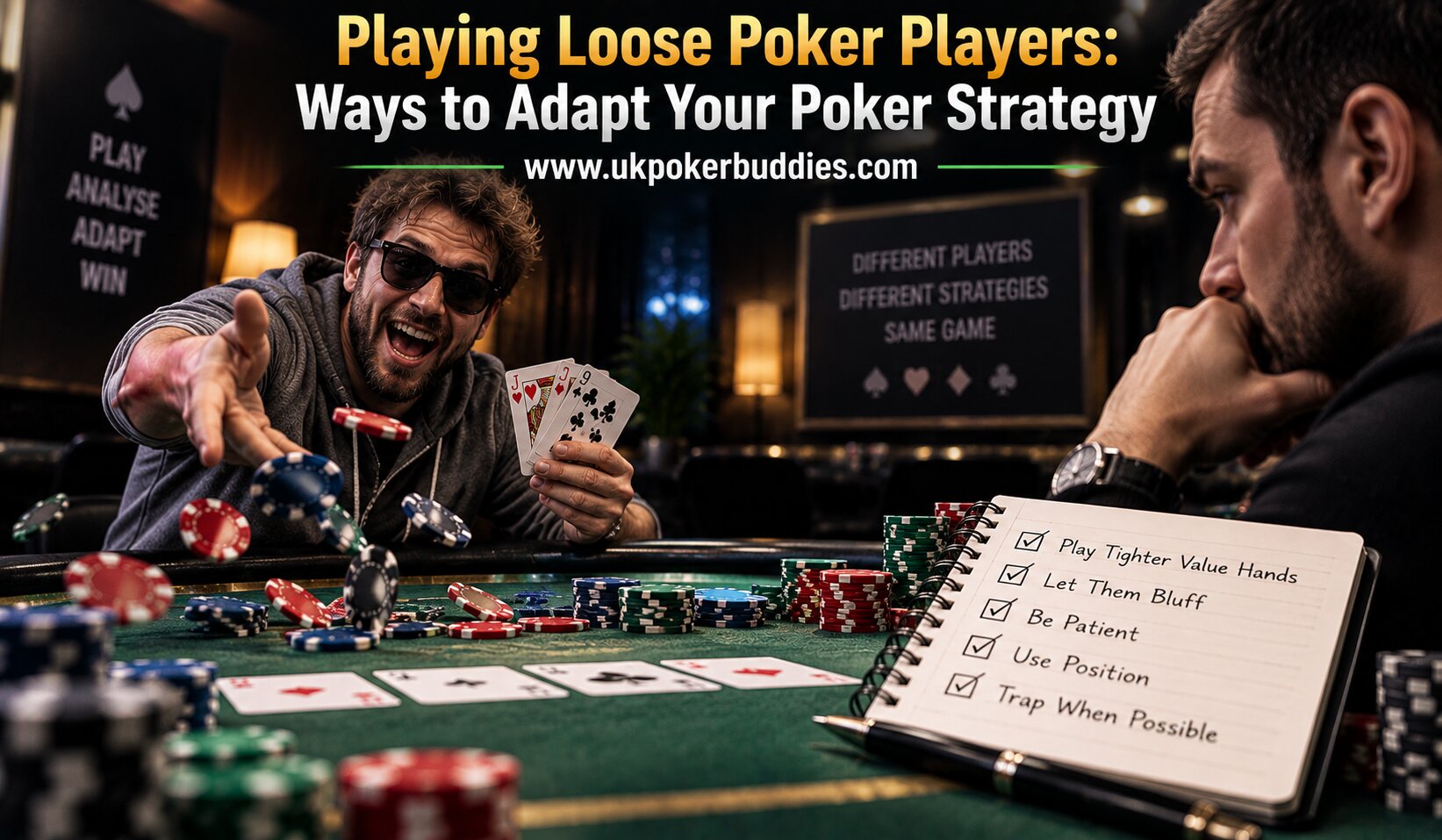
Poker becomes much more interesting when you face opponents who play a large number of hands. Loose poker players are willing to enter pots with a wider range of starting hands, call more frequently, and sometimes apply pressure with aggressive bets and raises.
For a tighter player, facing this style can feel uncomfortable. You may find yourself dealing with more bets, more unusual hands, and more difficult decisions.
The good news is that loose players often create opportunities for opponents who know how to adjust.
The key to playing against loose poker players is not to become loose yourself. Instead, you should understand their tendencies, widen some of your value ranges, avoid unnecessary bluffs, and make decisions based on their actual betting patterns.
What Is a Loose Poker Player?
A loose poker player enters more pots than a tight player.
They may play hands that a tighter opponent would normally fold, particularly from late position. They may also defend their blinds frequently and call raises with a wide range.
However, “loose” does not necessarily mean “bad.”
Some experienced players deliberately use wide ranges because they are comfortable playing post-flop.
There is also an important difference between loose-passive and loose-aggressive players.
A loose-passive player may call frequently but rarely raise.
A loose-aggressive player may enter many pots while also betting and raising aggressively.
Identifying which type you are facing is one of the first steps toward creating the right strategy.
Why Loose Players Can Be Difficult
Loose players make the game less predictable.
When someone plays many starting hands, it becomes harder to put them on a narrow range.
For example, if a tight player raises before the flop, you may be able to estimate that they have a relatively strong range.
A loose player could have premium cards, suited connectors, medium pairs, weaker aces, or other speculative hands.
This wider range means you need to rely more heavily on their actions, position, bet sizing, and board texture.
Do Not Try to Bluff Too Often
One of the biggest mistakes against loose players is attempting to bluff them repeatedly.
If an opponent is willing to call with many hands, your bluffs lose value.
A bluff works when you can reasonably expect the opponent to fold often enough. Against someone who dislikes folding, that expectation may not be realistic.
Instead of constantly trying to force loose players out of pots, look for situations where they have shown weakness and where your story makes sense.
Most importantly, be prepared to abandon a bluff when the opponent continues showing significant strength.
Value Betting Becomes More Important
Loose players can make excellent targets for value betting.
If they call with a wide range of weaker hands, you can often extract more value from strong hands.
For example, if you hold top pair with a good kicker and your opponent regularly calls with weaker pairs or drawing hands, betting can be more profitable than checking.
The exact amount of value you can extract depends on the board, position, stack sizes, and your opponent’s tendencies.
The important principle is simple: when a loose player is willing to call too often, make sure your strong hands are getting paid.
Widen Your Value Range Carefully
Against a loose opponent, hands that would be thin value bets against a tight player can sometimes become profitable.
Suppose a tight player only continues with strong pairs and better.
A modest top pair may not be comfortable betting multiple streets.
A loose opponent may continue with many weaker hands.
That changes the situation.
However, widening your value range does not mean treating every pair as a premium hand. The board and betting action still matter.
If the board becomes dangerous and your opponent suddenly starts applying heavy pressure, reassess their range.
Pay Attention to How They Use Position
Loose players often enter pots from many positions, but their strategy can still vary depending on where they are sitting.
A loose player in early position may have a different range from the same player opening on the button.
Late-position raises can naturally contain more hands because fewer players remain behind them.
Position also matters after the flop.
If you have position on a loose player, you can often make better decisions because you get to see their actions first.
This can help you control pot sizes, value bet more effectively, and avoid unnecessary confrontations.
Let Aggressive Players Bet for You
Loose-aggressive players often create their own opportunities for opponents.
If they frequently bet and raise, you do not always need to respond with aggression of your own.
Sometimes calling with a strong hand allows them to continue bluffing.
For example, if an opponent has a tendency to fire multiple streets whenever they sense weakness, immediately raising every strong hand may cause them to fold their bluffs.
Allowing them to continue betting can sometimes produce more value.
This requires patience and a good understanding of their tendencies.
Be Careful With Marginal Hands
Although loose players may hold weak cards, that does not mean your marginal hands automatically become strong.
A common mistake is thinking, “They play everything, so my hand must be ahead.”
You still need to consider ranges.
A loose player can have many weak combinations, but they can also have strong combinations.
The fact that they play a wide range increases uncertainty rather than guaranteeing that you are ahead.
Board Texture Matters
The community cards can help you determine how a loose player’s range interacts with the hand.
On a dry board, a loose opponent may have many hands that missed completely.
This can create opportunities for controlled aggression.
On a highly connected board, however, their wide range may contain numerous pairs, draws, two-pair combinations, and other strong holdings.
A loose player may also continue with draws that a tight player would have folded.
Understanding the board helps you decide whether to bet for value, control the pot, or apply pressure.
Loose Players and Drawing Hands
Loose players often enter pots with suited cards, connected cards, and other speculative holdings.
That means coordinated boards deserve extra attention.
If a flush or straight draw completes on the turn or river, do not assume your opponent missed simply because their pre-flop range was weak.
Their wider range gives them more ways to connect with the board.
At the same time, their willingness to chase draws can create profitable value-betting opportunities when you hold a strong made hand.
Adjust Your Bet Sizing
Bet sizing can be particularly useful against loose opponents.
If a player frequently calls small bets, you may be able to increase your value-bet size when you hold a strong hand.
There is little benefit in using a tiny bet if the opponent is likely to call a larger amount with a wide range.
However, larger bets should still make sense relative to the pot and board.
Avoid increasing your bet size simply because you are frustrated by an opponent who keeps calling.
Your sizing should have a strategic purpose.
Do Not Get Frustrated by Their Calls
Loose players can make hands feel uncomfortable because they may call bets that seem surprising.
You might bet with a strong hand and get called by something you did not expect.
Instead of becoming frustrated, treat the information as useful.
If an opponent calls a large bet with a weak pair, you have learned something about their calling range.
That information can influence future value bets.
Poker rewards players who adjust to information rather than reacting emotionally to it.
How to Play Against Loose-Passive Players
Loose-passive players tend to call more than they raise.
This can make their betting patterns relatively useful.
If they suddenly make a large raise after calling several streets, their range may be stronger than usual.
Against these players, value betting can be highly effective because they may call with hands that are weaker than yours.
At the same time, large bluffs may be less attractive if they are unwilling to fold.
How to Play Against Loose-Aggressive Players
Loose-aggressive players require a different approach.
They may raise frequently, continuation bet often, and apply pressure across multiple streets.
Against them, you need to distinguish between genuine strength and aggression that comes from their wide strategy.
Strong bluff-catchers can sometimes become valuable against players who bluff frequently.
You can also allow them to make aggressive mistakes rather than constantly trying to outplay them with marginal holdings.
Patience is often a powerful weapon against excessive aggression.
Loose Players and Short-Handed Poker
Loose styles can become even more common when fewer players remain.
At a six-handed table, players naturally need to participate in more pots than they would at a full-ring table.
If an opponent continues playing extremely wide, their range may contain many marginal hands.
Position becomes especially valuable in these situations.
You can attack their wide ranges while still maintaining discipline about which hands you use to continue.
Common Mistakes Against Loose Players
One common mistake is trying to out-loose them.
You do not need to play every hand simply because your opponent does.
Another mistake is bluffing too frequently.
If they call too much, your bluffs become less profitable.
Players also sometimes underestimate how strong a loose player’s range can be after significant aggression.
A player may be loose overall while still having a strong range in a particular situation.
How to Improve Your Strategy
Start by identifying why the player is loose.
Do they call too much?
Do they raise frequently?
Do they defend their blinds widely?
Do they chase draws?
Do they continue calling with weak pairs?
These details are more useful than simply labeling someone “loose.”
Once you understand their specific tendencies, adjust accordingly.
Against a loose caller, focus on value.
Against a loose-aggressive player, look for opportunities to let them bluff.
Against a player who is loose but capable of making strong adjustments, avoid becoming predictable.
Final Thoughts
Playing against loose poker players requires patience, discipline, and careful observation.
Loose opponents may enter many pots and make unconventional calls, but their wide ranges can also create valuable opportunities. Instead of trying to force them to fold, focus on extracting value when you have strong hands and choosing your bluffs carefully.
Position, board texture, bet sizing, and stack sizes remain important throughout the hand. Most importantly, remember that a loose player is not automatically a weak player.
The best adjustment is to study what the opponent actually does.
If they call too much, value bet them. If they bluff too frequently, give them opportunities to continue. If they suddenly show major strength, reassess their range rather than assuming they are always weak.
The goal is not to change your entire poker style. It is to make targeted adjustments that exploit the specific weaknesses of the player sitting across from you.