

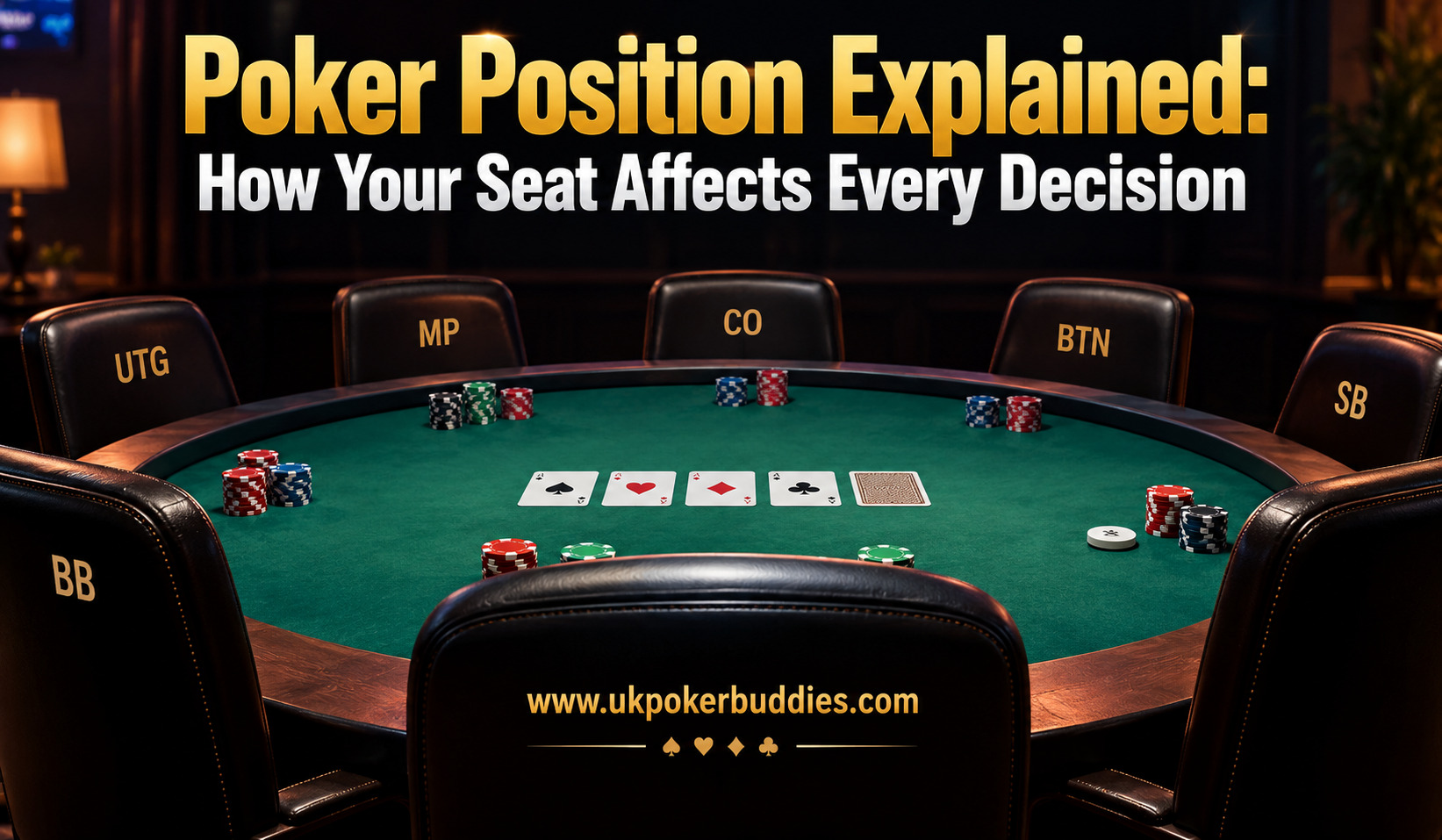
In poker, the cards you receive are important, but they are not the only factor that determines how well you can play a hand. Your poker position at the table can have a major impact on the decisions you make, the amount of information available to you, and the way your opponents respond to your actions.
Position refers to where you are seated in relation to the dealer button and the blinds. Some seats allow you to act before most players, while others let you see what your opponents do before making your decision. This difference may seem small at first, but it can significantly influence your strategy.
Understanding poker position is one of the most useful skills for anyone trying to improve their game. Whether you play casually or regularly, knowing when you have a positional advantage can help you make more informed decisions.
What Is Poker Position?
Poker position describes your place at the table and determines when you act during a betting round.
In Texas Hold’em, action generally moves clockwise around the table. The player immediately to the left of the dealer button posts the small blind, followed by the big blind. After the cards are dealt, players act according to their position.
The key concept is simple: the later you act, the more information you have.
If several players have already checked, bet, or folded before your turn, you can use those actions to help evaluate your decision. A player acting first has less information because they must make a decision before seeing what others do.
This is why experienced players often place considerable value on position.
Why Position Matters So Much in Poker?
Poker involves incomplete information. You do not know your opponents’ cards, so every piece of information you can gather has value.
When you are in a later position, you can observe how opponents behave before you commit chips to the pot. You may see whether they check, raise, call, or fold. These actions can provide clues about the strength of their hands.
Position can also make it easier to control the size of the pot. When you act later, you have more opportunities to decide whether you want to keep betting, check behind, or reduce your investment.
For example, suppose you have a moderately strong hand and several opponents have already checked. Acting later may give you an opportunity to make a bet and potentially win the pot without showing down your cards.
On the other hand, if an opponent makes a large bet before your turn, you have additional information that can influence whether continuing is worthwhile.
Early Position: Play With More Caution
Early position is generally considered one of the more difficult places to play from because you have many players still waiting to act.
When you raise from early position, opponents behind you can respond with a call, raise, or fold. You therefore have less certainty about what will happen after your decision.
Because of this, players often use a tighter strategy from early position. Stronger starting hands tend to be more attractive because they are better equipped to handle action from players behind you.
This does not mean you should only play premium hands. Rather, your starting-hand selection should generally be more selective than it would be from a later position.
Middle Position: More Flexibility
Middle position provides a balance between early and late seats.
Some players have already acted, giving you useful information, but there are still opponents behind you who can enter the pot.
This means your strategy can become somewhat more flexible compared with early position. However, you still need to consider the possibility that players behind you may raise or call.
A common mistake among newer players is to treat middle position as if it were late position. Having a few players act before you does not eliminate the positional risk created by players still waiting to act.
Late Position: One of Poker’s Biggest Advantages
Late position is often where poker becomes more strategically interesting.
The button, which represents the dealer position, is particularly valuable because you normally act later in post-flop betting rounds. You can observe the actions of most or all opponents before making your decision.
This extra information can allow you to play a wider range of hands in appropriate situations.
For example, imagine everyone before you folds and you are on the button. You may decide to raise with a wider range because there are fewer players left who can challenge your opening.
If the blinds fold, you win the pot without needing to see a flop.
Late position can therefore create opportunities to apply pressure, steal blinds, and make profitable bets based on opponents’ actions.
The Button: The Most Valuable Seat
The dealer button is usually considered the strongest position at the poker table.
The reason is not that the button receives better cards. Everyone has the same probability of receiving particular cards. The advantage comes from acting later.
After the flop, turn, and river, the button normally gets to observe other players before deciding what to do.
This can be especially useful when opponents check. You can decide whether to bet and take advantage of their apparent weakness or check behind if you prefer to control the pot.
The button also gives you more opportunities to take advantage of players who are reluctant to defend their blinds.
The Blinds: Forced Bets and Difficult Decisions
The small blind and big blind are unique because players in these positions have already committed chips before seeing how the hand develops.
The big blind often gets a chance to defend against raises, but it can still be difficult to play profitably because the player will usually be out of position after the flop.
The small blind can be even more challenging. You are putting money into the pot while generally expecting to act early in later betting rounds.
This is why blind strategy should not simply be based on whether a hand looks playable. You need to consider the amount already invested, the size of the raise, the number of players involved, and your positional disadvantage.
Position Changes the Value of Your Starting Hands
One of the most important lessons about poker position is that the same hand can have different strategic value depending on where you sit.
A hand that may be reasonable to raise from the button could be less attractive from early position.
Why? Because a later-position player has fewer opponents left to act and can often use position after the flop. An early-position player has more players behind who can respond aggressively.
This means starting-hand charts are useful, but they should not be viewed as completely independent of position.
Using Position Against Aggressive Players
Position becomes particularly valuable when facing aggressive opponents.
Suppose an opponent frequently bets when they have the opportunity. If you are acting after them, you can observe their betting patterns and decide whether their action represents genuine strength or an attempt to apply pressure.
Being in position also gives you more opportunities to respond to their mistakes.
Against a player who bets too frequently, you may be able to call with appropriate hands and allow them to continue putting chips into the pot. Against a player who gives up too often when checked to, you may find opportunities to bet when you are in position.
The key is to pay attention to patterns rather than making decisions based on one action.
Common Poker Position Mistakes
New players often underestimate position and focus almost entirely on their own cards.
One common mistake is playing too many hands from early position. A player may see a hand that looks interesting and enter the pot without considering how many opponents are still behind.
Another mistake is failing to take advantage of late position. Some players become overly cautious on the button even when the action before them suggests an opportunity to raise.
Players can also forget that position continues to matter after the flop. Winning the pre-flop action does not remove positional considerations from the rest of the hand.
How to Improve Your Positional Play
The easiest way to improve is to start thinking about position before thinking about your cards.
Before entering a hand, ask yourself:
- Where am I sitting relative to the button?
- How many players still have to act?
- What have the players before me done?
- Will I have position after the flop?
- How might my position affect the range of hands I should play?
Over time, these questions become part of your normal decision-making process.
You can also review hands after playing and identify situations where position influenced the outcome. Look for hands where you entered from early position with a marginal holding or failed to apply pressure from late position.
Final Thoughts
Poker position is one of the fundamental concepts that separates thoughtful decision-making from simply playing the cards in front of you. Your seat determines the order in which you act, and that order affects how much information you have throughout the hand.
Early position generally requires greater caution because several players remain behind you. Middle position offers more flexibility, while late position provides valuable information and opportunities to apply pressure. The button is particularly powerful because of its post-flop positional advantage, while the blinds require careful strategy because of their forced investments and frequent out-of-position play.
The important lesson is that poker is not only about having strong cards. Knowing when you act and using that information effectively can be just as important.
By learning to adjust your strategy according to your seat, you can make more disciplined decisions, recognize profitable opportunities, and develop a stronger understanding of how poker works.