
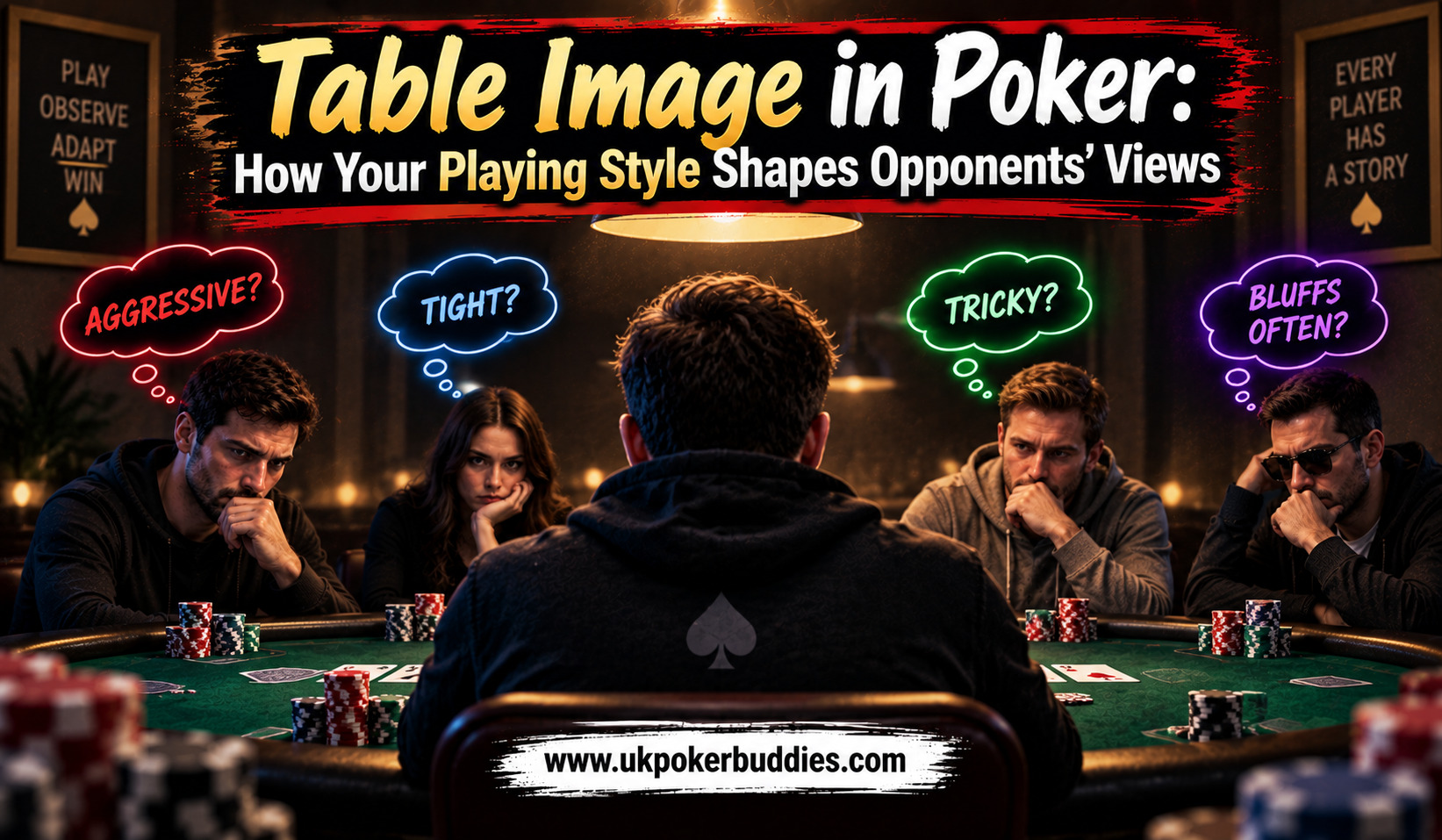
Poker is not only about the cards you are dealt. It is also about how other players perceive you at the table. Before making a decision against you, opponents may already have an idea of whether you are aggressive, cautious, loose, or difficult to bluff.
This perception is known as your table image in poker.
Your table image develops from your actions throughout a session. The hands you play, how often you raise, how frequently you bluff, and how you respond to pressure all contribute to the way opponents view you.
Understanding table image can help you recognize how other players are likely to react to your bets and how you can adjust your strategy to take advantage of their expectations.
What Is Table Image in Poker?
Your table image is the impression other players have of your playing style.
For example, if you have folded most hands for an hour and then suddenly make a large raise, opponents may assume you have a strong hand.
On the other hand, if you have been raising frequently, opponents may consider you aggressive and become more willing to call or challenge your bets.
Your actual cards are only part of the information opponents use. Your previous behavior can influence their decisions just as much.
Why Table Image Matters
Poker involves incomplete information. Players rarely know exactly what their opponents hold.
As a result, they rely on patterns and observations.
Your table image can influence:
- How often opponents call your bets
- Whether they believe your bluffs
- How willing they are to challenge your raises
- How they interpret your bet sizing
- Whether they give your strong hands credit
A player with a tight image may receive more respect when entering a pot, while an aggressive player may get more action when holding a strong hand.
This creates opportunities to use your image strategically.
Tight Table Image
A tight player enters relatively few pots and tends to choose stronger starting hands.
If this is how opponents perceive you, your raises may receive more respect.
For example, imagine you have folded several hands in a row. You then raise from an early position.
An opponent may assume that your range is strong because your previous actions suggest that you are selective.
This can sometimes make bluffing easier.
However, a tight image has another advantage: when you actually hold a premium hand, opponents may be less likely to believe they can profitably challenge you.
Loose Table Image
A loose table image develops when you frequently enter pots and play a wide range of hands.
Opponents may begin to assume that your range is weak or unpredictable.
This can make it harder to bluff because players may be more willing to call your bets.
However, a loose image can be extremely useful when you finally pick up a strong hand.
If opponents believe you are capable of raising with weak hands, they may give you more action with their own decent holdings.
In other words, being perceived as loose can make your strong hands more profitable.
Aggressive Table Image
An aggressive image develops when you frequently bet, raise, and apply pressure.
Aggressive players can win many pots without reaching showdown because opponents may prefer to avoid difficult decisions.
But there is a downside.
If you become too predictable, opponents may begin calling lighter or setting traps for you.
An aggressive image therefore works best when your opponents cannot easily determine whether your bet represents a strong hand or a bluff.
Passive Table Image
A passive player tends to call more often and raise less frequently.
If opponents view you as passive, a sudden raise can carry significant weight.
They may assume that you have a particularly strong hand.
The disadvantage is that opponents may also recognize that you are unlikely to bluff frequently.
They might therefore fold when you bet strongly or attempt to pressure you when you show weakness.
A passive image can make it difficult to extract maximum value from strong hands because opponents may be cautious about putting money into the pot.
How Your Actions Build an Image
Your table image develops gradually.
Every decision can contribute to it.
If you repeatedly raise before the flop, opponents may label you aggressive.
If you frequently fold to bets, they may assume you are cautious.
If you show down several bluffs, opponents may become more suspicious of your future bets.
Even actions that do not involve significant amounts of chips can influence perception.
This means you should be aware that your decisions today can affect how opponents play against you later in the session.
Your Table Image Can Change
Your image is not permanent.
Suppose you begin a session by playing very tightly. After an hour, opponents may have a clear impression of you.
Later, you start opening more pots and applying pressure.
Your image can gradually shift from tight to aggressive.
This is important because opponents do not always evaluate your entire session equally. Recent hands can have a particularly strong influence on what they believe you are doing now.
Recognizing this can help you adjust your strategy.
Using a Tight Image to Bluff
A tight image can create opportunities for well-timed bluffs.
If opponents believe you only play strong hands, a carefully selected bet may receive more respect.
For example, if you have been folding for a long period and then represent strength on a favorable board, opponents may find it difficult to continue with marginal hands.
However, your bluff still needs to make sense.
A tight image cannot compensate for a poor board, unrealistic betting line, or an opponent who rarely folds.
Using a Loose Image for Value
A loose image can be particularly useful when you make a strong hand.
Imagine opponents have seen you raise frequently with a variety of holdings.
You then pick up a premium hand.
Because they believe your range is wide, they may be more willing to call your bets or attempt to challenge your aggression.
This can allow you to build a larger pot with strong holdings.
In this situation, your previous loose play has created additional value.
Table Image and Bluff Catching
Your image also affects how opponents respond when you appear weak.
If you have a reputation for bluffing, opponents may call your bets more often.
This means they may also attempt to catch your bluffs with medium-strength hands.
If you rarely bluff, they may be more willing to fold when you make a large river bet.
Understanding this relationship is useful when deciding whether to bluff or value bet.
Opponents Have Different Perceptions
Not every player at the table will view you in exactly the same way.
One opponent may think you are extremely aggressive.
Another may believe you are relatively tight.
A third player may not have enough information to form an opinion.
This is why table image should be viewed on an opponent-by-opponent basis.
Instead of asking, “What does the table think of me?” consider:
“What does this particular opponent think of me?”
That question can lead to better decisions.
Online vs Live Table Image
Table image can develop differently in online and live poker.
At a live table, opponents can observe your physical behavior, speed of decisions, verbal interactions, and general presence.
Online players do not have access to those physical cues. Instead, they rely more heavily on statistics, betting patterns, timing, and previous hands.
The basic principle remains the same: your past behavior creates expectations about your future decisions.
Common Table Image Mistakes
One common mistake is ignoring your own image.
Players sometimes focus entirely on their cards and fail to consider how opponents interpret their actions.
Another mistake is trying too hard to create a particular image.
You do not need to deliberately play badly just to appear loose or make unnecessary bluffs to look aggressive.
Your image should develop naturally from your overall strategy.
Players also sometimes assume that everyone is paying close attention.
Some opponents may be highly observant, while others may barely remember previous hands.
Your adjustments should therefore depend on the quality of information you have.
How to Use Table Image Effectively
The best approach is to observe how opponents react to your actions.
After playing several hands, ask yourself:
Do opponents seem to respect my raises?
Are they calling my bets more frequently?
Have they started raising back at me?
Have they seen me show down strong or weak hands?
Does my recent behavior differ from my earlier strategy?
These observations can help you understand how your image is developing.
You can then adjust your betting and bluffing strategy accordingly.
Changing Your Image Strategically
One of the most useful concepts is changing your image when opponents begin adapting to you.
Suppose you have been playing aggressively and opponents start calling more often.
Instead of continuing to bluff at the same frequency, you can tighten your range and focus on extracting value.
Likewise, if opponents believe you are extremely tight, you may be able to widen your opening range and steal more pots.
This creates a constant strategic cycle:
You act → opponents form an opinion → opponents adjust → you adjust again.
Strong poker players understand this dynamic.
Final Thoughts
Table image in poker is the reputation you develop through your actions and the way opponents interpret your playing style. Whether you are seen as tight, loose, aggressive, or passive can influence how much respect your bets receive and how willing opponents are to continue against you.
A tight image can help your bluffs succeed, while a loose or aggressive image can encourage opponents to give you more action when you hold strong hands.
The most important thing is to remember that table image is not fixed. It can change throughout a session, and different opponents may have completely different opinions about your style.
Pay attention to how players react to your decisions, and use those observations to adjust your strategy. When you understand not only the cards you hold but also the image opponents have of you, poker becomes a much deeper strategic game.