

Rules, Gameplay, Hand Rankings and Beginner Guide
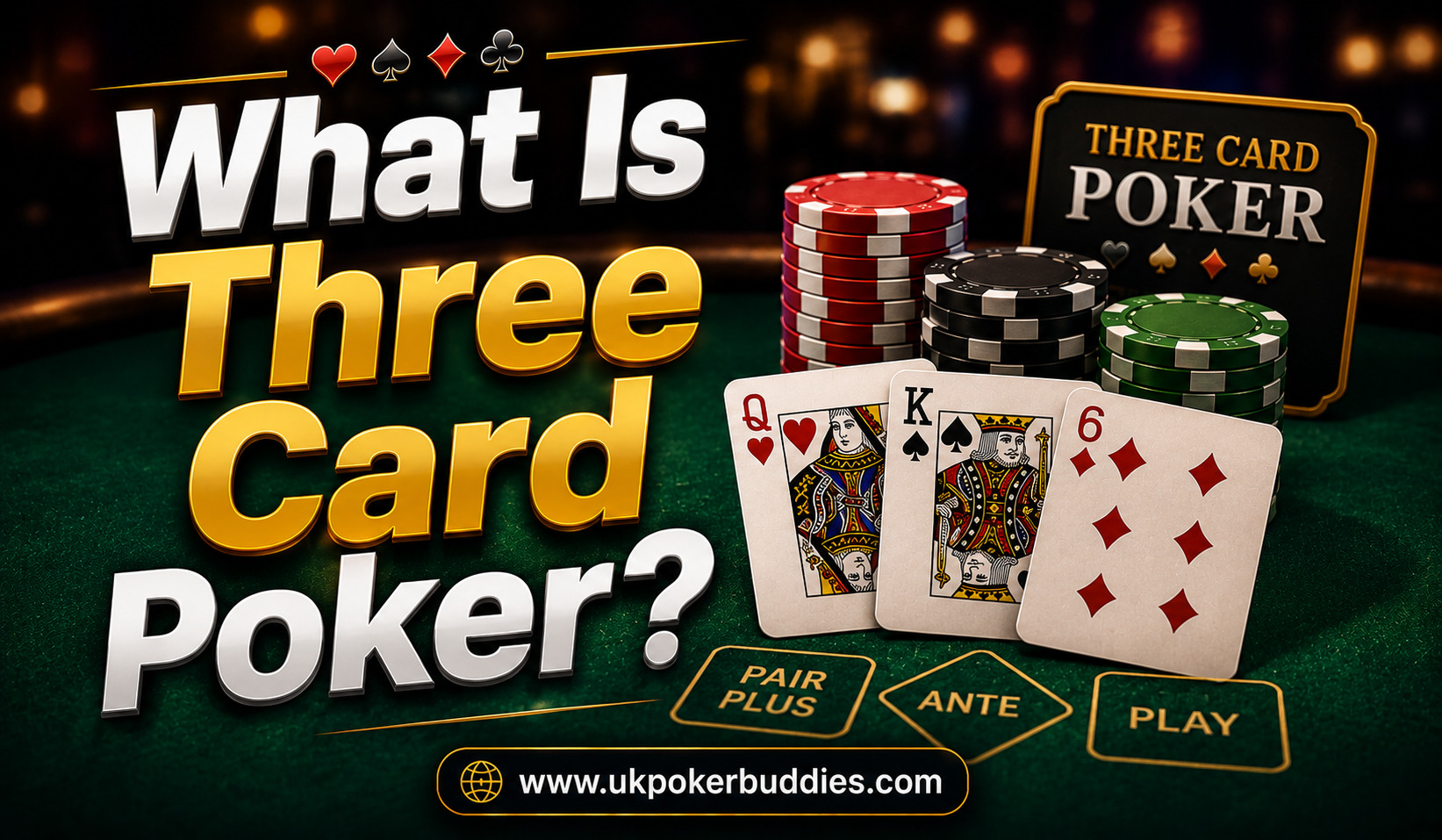
Three Card Poker is a casino card game that combines elements of traditional poker with a faster, simplified betting format. Unlike Texas Hold’em or Omaha, players in Three Card Poker receive only three cards, and the game is played against the dealer rather than through a conventional multi-player poker competition.
The game has become popular because of its straightforward rules and relatively quick rounds. Players do not need to memorize complicated betting sequences to understand the basic format. At the same time, the game’s two main betting options, commonly known as the Ante-Play and Pair Plus wagers, create different ways to approach a hand.
For newcomers, understanding how the cards are dealt, how the dealer qualifies, how hands are ranked and how payouts work is important before playing. This guide explains the fundamentals of Three Card Poker in a simple format.
What Is Three Card Poker?
Three Card Poker is a casino table game played with a standard 52-card deck. The player competes directly against the dealer for the main part of the game.
Each participant receives three cards, and the dealer also receives three cards. The cards are generally dealt face down. Players then decide whether to continue or fold based on their hand.
The game is different from traditional poker because players do not compete against one another by trying to outbet each other. Instead, the main objective is to create a stronger three-card poker hand than the dealer.
The game also has a separate wager called Pair Plus, which can pay when a player’s three-card hand contains a pair or a stronger combination, depending on the rules and paytable being used.
How Three Card Poker Works
A typical round begins when a player places an Ante wager. Depending on the casino and table rules, the player may also choose to place a Pair Plus wager.
After the bets are placed, the player and dealer each receive three cards. The player looks at their cards and must then decide whether to continue or fold.
If the player folds, the hand ends and the relevant wager is generally forfeited. If the player continues, they place a Play wager, commonly equal to the original Ante.
The dealer then reveals their cards. The player’s hand is compared with the dealer’s hand to determine the result.
This simple structure allows a complete round to be played relatively quickly compared with many other poker-based casino games.
The Ante-Play Wager
The Ante-Play portion is the central part of Three Card Poker.
A player begins with an Ante wager and receives three cards. After seeing those cards, the player can either fold or make a Play wager to continue.
If the player continues and has a stronger qualifying result against the dealer, the game pays according to the table’s rules. If the dealer has the stronger hand, the player generally loses the Ante and Play wagers.
An important feature is the dealer qualification rule. In the standard version of Three Card Poker, the dealer must usually have at least a queen-high hand to qualify. If the dealer does not qualify, the exact treatment of the Ante and other payouts depends on the rules of the game.
Players should always check the casino’s posted rules because payout structures can vary.
What Is the Pair Plus Bet?
Pair Plus is a separate wager based only on the player’s three-card hand. Unlike the Ante-Play wager, it does not require the player’s hand to beat the dealer.
The wager generally wins when the player has at least a pair, although the exact minimum and payout table depend on the version being offered.
For example, a player holding three cards that contain a pair may receive a Pair Plus payout even if the dealer’s hand would beat the player’s hand in the main game.
This makes Pair Plus different from the Ante-Play wager. One is focused on the player’s hand meeting a particular poker combination, while the other involves comparing the player with the dealer.
Three Card Poker Hand Rankings
The hand rankings are similar to traditional poker but are adjusted for a three-card format. Because only three cards are available, some familiar five-card combinations are impossible.
The standard ranking from strongest to weakest is generally as follows:
| Rank | Hand | Example |
| 1 | Straight Flush | 9-8-7 of the same suit |
| 2 | Three of a Kind | Three queens |
| 3 | Straight | 7-6-5 of different suits |
| 4 | Flush | Three cards of the same suit |
| 5 | Pair | Two kings |
| 6 | High Card | Ace, 9, 4 |
One important difference from traditional poker is that a straight ranks above a three of a kind in some Three Card Poker rules, while a flush ranks below a straight. Players should therefore learn the specific ranking used at their table instead of assuming that five-card poker rankings apply exactly.
Why the Ranking Is Different
The ranking system reflects the smaller number of cards available. A three-card hand has fewer possible combinations than a five-card hand, which changes the relative frequency of different hands.
For example, in conventional poker, a full house is a possible hand. In Three Card Poker, there are only three cards, so a full house cannot occur.
This makes the game easier to understand once players become familiar with its specific ranking order.
The Dealer Qualification Rule
The dealer qualification rule is one of the features that distinguishes Three Card Poker from many traditional casino card games.
In the standard version, the dealer generally needs a queen-high hand or better to qualify. If the dealer fails to qualify, the outcome is handled according to the game’s rules.
For players, this rule creates an additional layer of interest because beating the dealer is not the only factor determining the settlement of the Ante portion.
However, the exact payout arrangement can vary between casinos and game versions. Reading the table’s paytable before placing a wager is therefore essential.
Ante Bonus and Special Payouts
Some Three Card Poker versions include an Ante Bonus. This can provide an additional payout when the player’s hand reaches a qualifying strong combination, such as a straight, three of a kind or straight flush.
The exact qualifying hands and payout amounts vary according to the casino’s rules.
This means two Three Card Poker tables can appear similar while offering different payout schedules. Players should compare the posted rules and paytables rather than assuming that every table uses identical conditions.
Before playing, check:
- The hand-ranking order.
- The dealer qualification requirement.
- Ante and Play payout rules.
- Pair Plus and bonus payout tables.
Three Card Poker vs Traditional Poker
Three Card Poker may look like ordinary poker because it uses familiar hand rankings and playing cards, but the gameplay is substantially different.
In Texas Hold’em, for example, players compete against other players and can use betting decisions as part of their strategy. Three Card Poker is primarily a player-versus-dealer casino game.
There are also fewer cards and fewer betting decisions. This makes Three Card Poker faster and easier to learn, although it also means that players have less control over the outcome of individual rounds.
| Feature | Three Card Poker | Texas Hold’em |
| Cards per player | 3 | 2 private cards + community cards |
| Main opponent | Dealer | Other players |
| Main betting decision | Fold or Play | Multiple betting actions |
| Game pace | Generally fast | Can vary considerably |
| Strategy | Hand selection and betting decisions | Position, ranges, betting and probability |
Basic Strategy for Beginners
Three Card Poker is relatively simple, but beginners should avoid treating it as a game where every hand deserves a Play wager.
The main decision comes after receiving the three cards. Players must decide whether the hand is strong enough to continue. In standard strategy discussions, a queen-high or better hand is often used as a reference point for the Ante-Play decision, although the appropriate approach can depend on the exact rules and house edge.
The Pair Plus wager is different because it is based on whether the player receives a qualifying poker combination. Its value depends heavily on the payout schedule.
Players should also remember that no betting approach can remove the house edge from a casino game.
Why Three Card Poker Remains Popular
The game’s popularity comes largely from its accessibility. A player can understand the basic rules without learning the extensive betting structures found in more complex poker formats.
The fast pace is another attraction. Each hand is resolved relatively quickly, allowing players to experience multiple rounds during a session.
The combination of familiar poker terminology, simple decisions and casino-style play makes Three Card Poker appealing to people who want a shorter and more straightforward card-game format.
Conclusion
Three Card Poker offers a fast and accessible alternative to traditional poker formats. Its three-card structure, player-versus-dealer format and limited betting decisions make it relatively easy for beginners to understand.
The most important concepts are the hand rankings, Ante-Play wager, Pair Plus option and dealer qualification rule. Players should also remember that rules and payout tables can vary between casinos, so checking the specific table conditions is essential.
Like other casino games, Three Card Poker involves chance and financial risk. Understanding the rules can help players make informed decisions, but there is no guaranteed method of winning. For those who enjoy poker-inspired casino games, its straightforward structure and quick rounds explain why Three Card Poker continues to attract attention.
Frequently Asked Questions
How many cards are used in Three Card Poker?
Each player and the dealer normally receive three cards from a standard 52-card deck.
What is the strongest hand in Three Card Poker?
A straight flush is generally the highest-ranking hand, followed by three of a kind, straight, flush, pair and high card.
What is Pair Plus?
Pair Plus is a separate wager based on the player’s three-card hand. It generally pays when the player makes at least a pair, according to the specific table’s paytable.
Does the dealer always play?
The dealer participates in every hand, but a qualification rule may determine how certain portions of the Ante wager are settled.
Is Three Card Poker the same as Texas Hold’em?
No. Three Card Poker is primarily a player-versus-dealer casino game with three-card hands, while Texas Hold’em is a community-card poker game normally played against other players.